Ise Jingū
Inner Shrine (Naikū) and Outer Shrine (Gekū); the rebuilt-every-20-years architectural ritual is unique in the world.
Open in Maps ↗Home of Ise Jingū — the spiritual heart of Shintō — alongside Suzuka's F1 circuit, Mikimoto cultured pearls (invented here in 1893), Matsusaka wagyu, and the Iga and Kōga ninja heritage of the inland mountains.
Ise Jingū has been the imperial shrine to Amaterasu since at least the 4th century; its inner and outer shrines are rebuilt every 20 years from fresh hinoki cypress in a continuous architectural ritual called Shikinen Sengū — the most recent in 2013, the next in 2033.
Iga and Kōga (the latter now in Shiga, but historically twinned) were the heartlands of the shinobi (ninja) — clandestine intelligence specialists hired by warring daimyō from the 14th century onward; the Iga Ninja Museum preserves Edo-era manuals and techniques.
Modern Mie's identity was set in 1893 when Kokichi Mikimoto cultivated the world's first commercial cultured pearl in Toba's Ago Bay — within a decade Japan dominated the global pearl market and the Toba/Shima coast remained Japan's main pearl-farming region.
Mie's prefectural GDP is around ¥8.6 trillion (US$58 billion). Heavy manufacturing dominates: petrochemicals (Yokkaichi was Japan's first petrochemical complex), semiconductors (Kioxia's Yokkaichi fab is one of the world's largest NAND flash plants, jointly with Western Digital), and automotive (Honda Suzuka, Toyota suppliers along Ise Bay).
Semiconductors
Kioxia / Western Digital Yokkaichi is one of the world's largest NAND flash memory plants; Aichi's auto cluster extends into Mie via Suzuka.
Petrochemicals
Yokkaichi (the original 1956 Yokkaichi Combinat) is Japan's largest petrochemical-and-refinery cluster by capacity.
Automotive — Honda Suzuka
Honda Motor's Suzuka plant builds the Civic and is the home of the Suzuka F1 circuit.
Pearls & marine farming
Mikimoto's original Pearl Island remains a working pearl-farm and a tourist site; Ise-Shima's pearls account for most of Japan's domestic production.
Premium beef & tea
Matsusaka beef (one of Japan's three great wagyu) and Ise-cha green tea.
Ise Jingū
Inner Shrine (Naikū) and Outer Shrine (Gekū); the rebuilt-every-20-years architectural ritual is unique in the world.
Open in Maps ↗Suzuka Circuit
Home of the Japanese Grand Prix; the figure-8 layout (the world's only crossover-bridge F1 circuit) is iconic.
Open in Maps ↗Iga Ninja Museum
Working ninja-house with rotating walls and hidden weapons; live demonstrations daily.
Open in Maps ↗Mikimoto Pearl Island (Toba)
Where Kokichi Mikimoto cultured the first commercial pearl in 1893; women divers (ama) still demonstrate dives twice daily.
Open in Maps ↗Kumano Kodō (Iseji route)
Pilgrimage trail through the mountains south to Wakayama's Kumano Sanzan; UNESCO World Heritage.
Open in Maps ↗Nabana no Sato
Massive flower park west of Yokkaichi famous for its tens of millions of LED-light winter illuminations.
Open in Maps ↗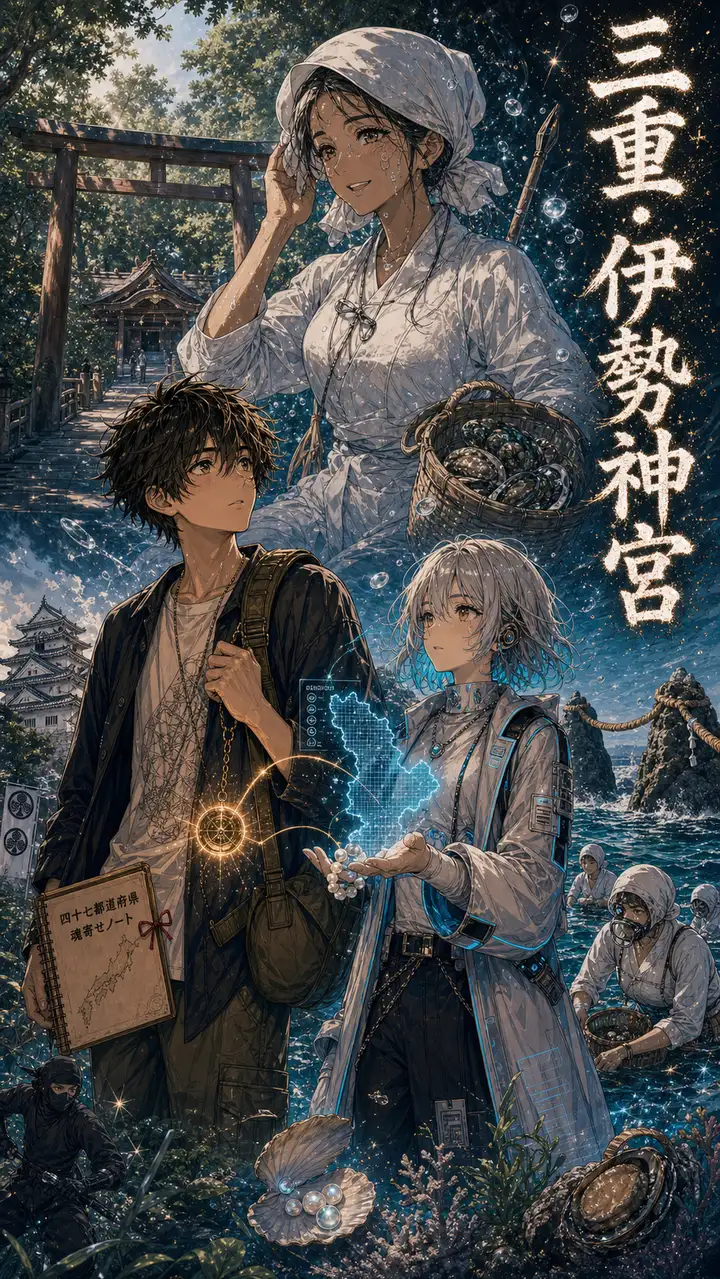
The capital of Mie is Tsu.
Mie is part of the Kansai region of Japan.
Mie's key industries include Semiconductors, Petrochemicals, Automotive — Honda Suzuka, Pearls & marine farming.
Top attractions in Mie include Ise Jingū, Suzuka Circuit, Iga Ninja Museum, Mikimoto Pearl Island (Toba).
Notable companies headquartered in Mie include Kioxia (Yokkaichi), Western Digital (Yokkaichi joint venture), Honda Suzuka, Mikimoto Pearl, Hyakugo Bank.
Scroll to zoom, drag to pan, tap a prefecture to open its chapter.