Himeji Castle
'White Heron Castle' — Japan's most beautiful original castle, intact since 1609. UNESCO World Heritage.
Open in Maps ↗Western Kansai's port and castle prefecture — Kobe is Japan's most cosmopolitan minor city, Himeji has the country's most beautiful original castle (UNESCO), and Akashi marks the Standard Meridian of Japan. Kobe beef, Akashi-yaki octopus dumplings, and the world's longest suspension bridge all live here.
Himeji Castle ('White Heron Castle') was completed in 1609 and survived WWII firebombing — every other major Kansai keep was destroyed. Its 1993 inscription as Japan's first UNESCO World Heritage cultural site set the country's preservation template.
Kobe opened to foreign trade in 1868 as one of the original treaty ports. Its European-style Kitano-chō residences, Chinatown, and Indian and Jewish merchant communities made it Japan's most cosmopolitan small city through the early 20th century.
On 17 January 1995, the magnitude-7.3 Great Hanshin Earthquake killed ~6,400, destroyed central Kobe, and prompted the most ambitious urban-rebuilding program in Japan since 1945; the recovery is taught as a model in disaster planning worldwide.
Hyōgo's prefectural GDP is around ¥22 trillion (US$150 billion), Japan's 7th-largest. Heavy industry (Kobe Steel, Mitsubishi Heavy Kobe shipyard), shipping (Kobe Port is Japan's #4 container port), pharmaceuticals (Takeda Kobe), Akashi-strait fisheries, and Kobe's high-end retail and tourism economy.
Heavy industry — Kobe
Kobe Steel (Kobelco), Mitsubishi Heavy Industries Kobe shipyard (submarines), Kawasaki Heavy Industries shipyard.
Pharmaceuticals & life sciences
Takeda Pharmaceutical Kobe, Sysmex, Astellas, and the Kobe Biomedical Innovation Cluster on Port Island.
Premium agriculture
Kobe beef, Tajima beef (the source bloodline), Awaji onions, Tamba black soybeans.
Ports & logistics
Kobe Port is Japan's 4th-largest container port; the Akashi Kaikyō Bridge connects Honshū to Awaji Island.
Tourism
Himeji Castle, Kobe Chinatown, Arima Onsen, Kinosaki Onsen, Awaji Island, Hyōgo wineries.
Himeji Castle
'White Heron Castle' — Japan's most beautiful original castle, intact since 1609. UNESCO World Heritage.
Open in Maps ↗Kobe Chinatown (Nankinmachi)
One of Japan's three Chinatowns; arched gates, dimsum stalls, and Lunar New Year parade.
Open in Maps ↗Kitano-chō
Hillside neighborhood preserving Meiji-era European, Indian, and Jewish merchant residences — Kobe's cosmopolitan history made visible.
Open in Maps ↗Arima Onsen
Among Japan's three oldest hot springs (with Dōgo and Kusatsu); two famously different mineral water types — gold ('kinsen') and silver ('ginsen').
Open in Maps ↗Kinosaki Onsen
Northern Hyōgo's wooden onsen-town tradition; seven public baths, wooden bridges, willow-lined canal.
Open in Maps ↗Akashi Kaikyō Bridge
Connects Honshū and Awaji; the longest central span of any suspension bridge in the world from 1998 to 2022 (now overtaken by Çanakkale in Turkey).
Open in Maps ↗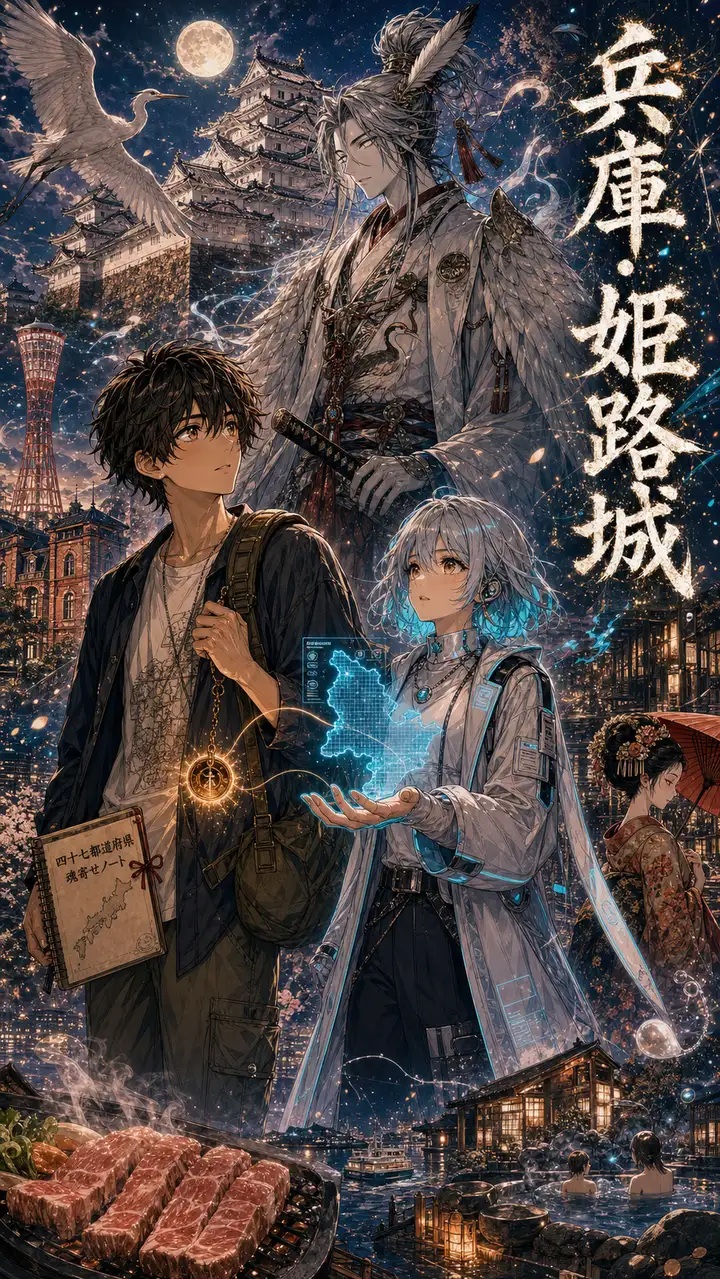
The capital of Hyōgo is Kobe.
Hyōgo is part of the Kansai region of Japan.
Hyōgo's key industries include Heavy industry — Kobe, Pharmaceuticals & life sciences, Premium agriculture, Ports & logistics.
Top attractions in Hyōgo include Himeji Castle, Kobe Chinatown (Nankinmachi), Kitano-chō, Arima Onsen.
Notable companies headquartered in Hyōgo include Kobe Steel, Mitsubishi Heavy Kobe, Kawasaki Heavy, Sysmex, Bank of Hyōgo.
Scroll to zoom, drag to pan, tap a prefecture to open its chapter.